
Medical students still spend years memorizing bones. How blood pushes through the chambers of the heart. Why kidneys fail. What the liver actually does all day. That knowledge is not going anywhere. But here is the thing nobody warned them about. The workplace they are about to enter has AI running on almost every screen, and their training did not cover a single second of it.
Bodies Still Come First
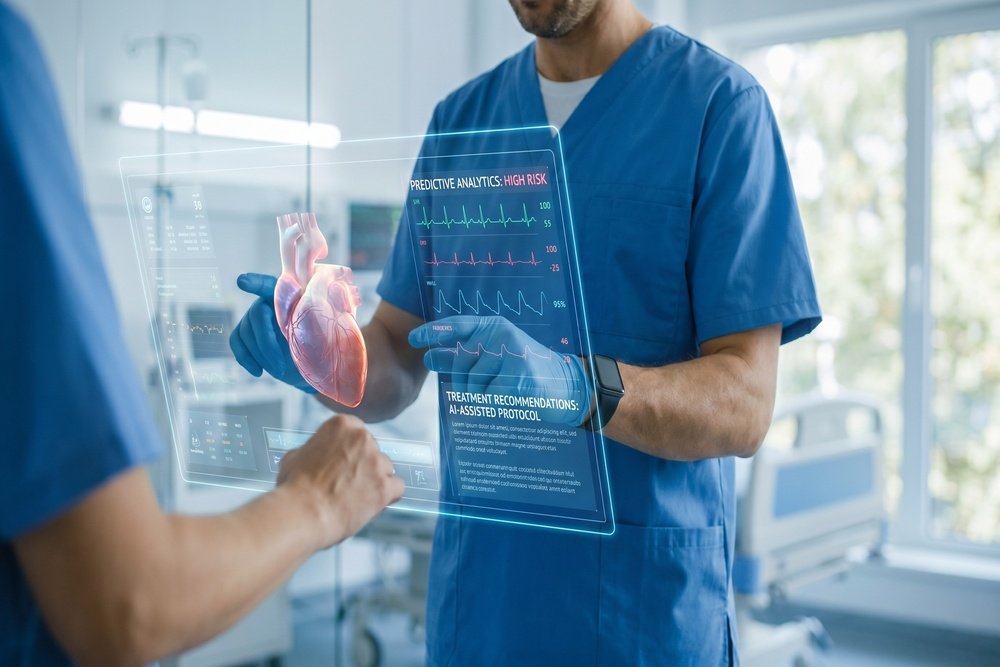
Anatomy and physiology remain the bedrock. Strip those away and nothing else in medicine makes sense. But something changes once AI enters the mix. A doctor who actually understands how a diagnostic algorithm landed on its recommendation brings a different kind of judgment to the table. That doctor can challenge the output or trust it, and either way the reasoning is grounded in something solid. A nurse who knows what set off a bedside alert reacts with purpose instead of fumbling through menus trying to silence a beeping screen.
Patients Have Changed Too
Old magazines and silence characterized waiting rooms in the past. Today, you’ll find them populated by people absorbed in their smartphones, reading up on health topics, checking symptoms, and exploring the newest hospital technologies. A few patients actually have a better understanding of a facility’s AI than the employees using it.
Read More: Beyond Chatbots: The AI Skills That Can Make a Difference at Work
That dynamic creates tension. When someone in a hospital gown senses that their provider does not really get the technology generating half the numbers in their chart, confidence erodes. And rebuilding trust once it cracks takes a long time. Education for healthcare professionals needs to catch up with the machines they are already expected to use.
Nobody Has to Start Their Career Over
No one is asking a veteran nurse to go back and get a computer science degree. The whole point is building enough of a foundation to use AI thoughtfully, push back on it when something looks off, and recognize the spots where the technology has real limitations. ProTrain’s artificial intelligence in healthcare certification program has been put together for people who barely have time to eat lunch, let alone sit through a semester of coursework. The material sticks to practical knowledge that applies in actual clinical and administrative settings. For a healthcare worker already drowning in patient loads, charting obligations, and mandatory education hours, a self-paced program built around their world is the only kind that stands a chance of getting finished.
This Reaches Every Department
It is tempting to frame this as a conversation about doctors and surgeons. They get the attention. But AI has crept into corners of the hospital most people never think about. Scheduling at the front desk runs through automated platforms. Lab technicians work shoulder to shoulder with systems that sort and prioritize results on their own. Billing departments push claims through AI-powered software before anyone picks up a phone.
When a whole team has a working understanding of those systems, things click into place. Miscommunication shrinks. Errors surface faster. People treat the tools as something they can evaluate and question rather than something they just accept because it came from a computer.
Conclusion
Understanding the human body teaches healthcare professionals how to help people get better. Understanding algorithms teaches them how to operate inside the version of medicine that is forming right now, whether they asked for it or not. The people who carry both skill sets are going to lead. Bones and organs and physiology are still at the core of everything. But knowing when to trust the machine on the screen and when to override it belongs right there next to them.